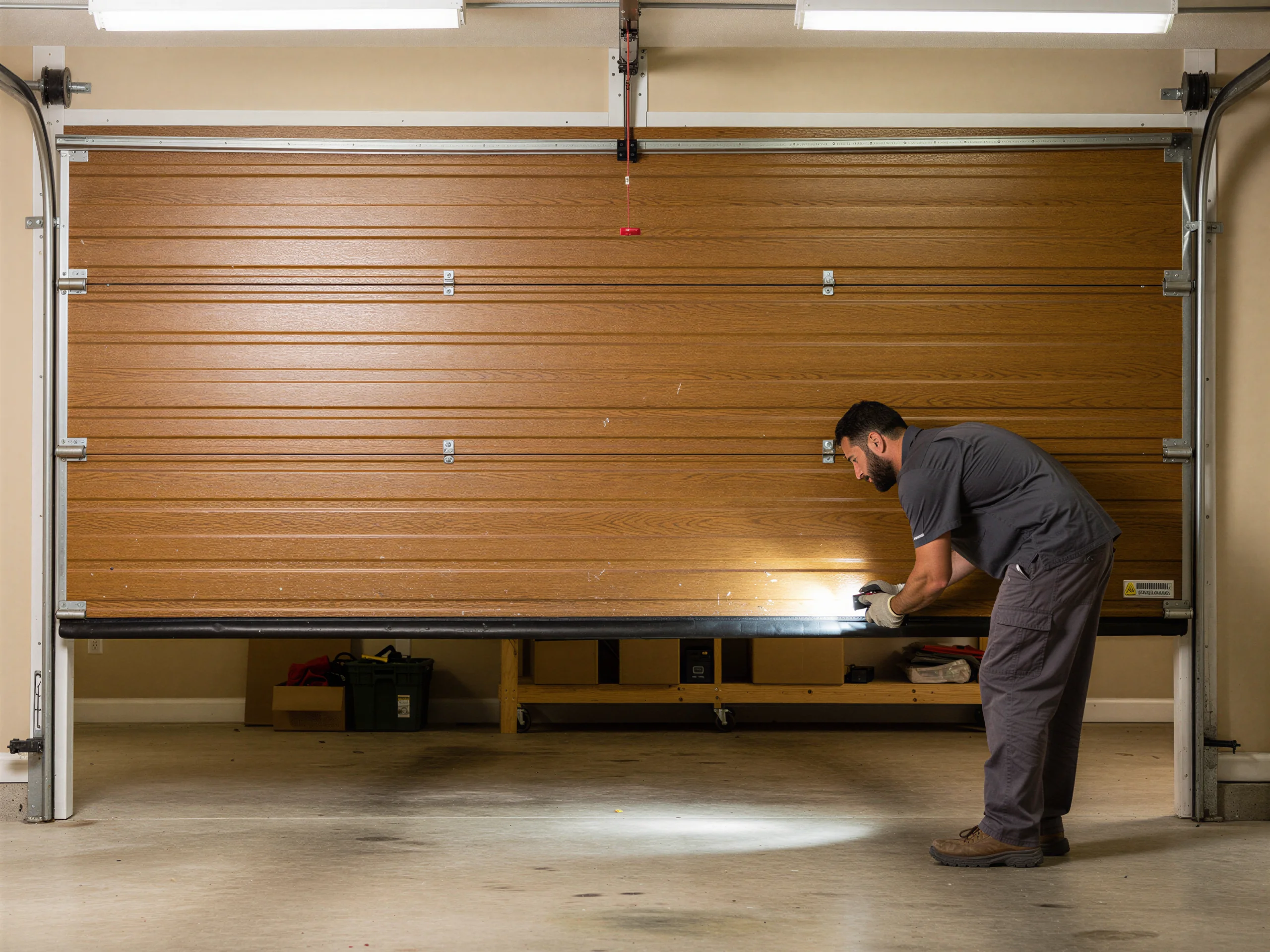
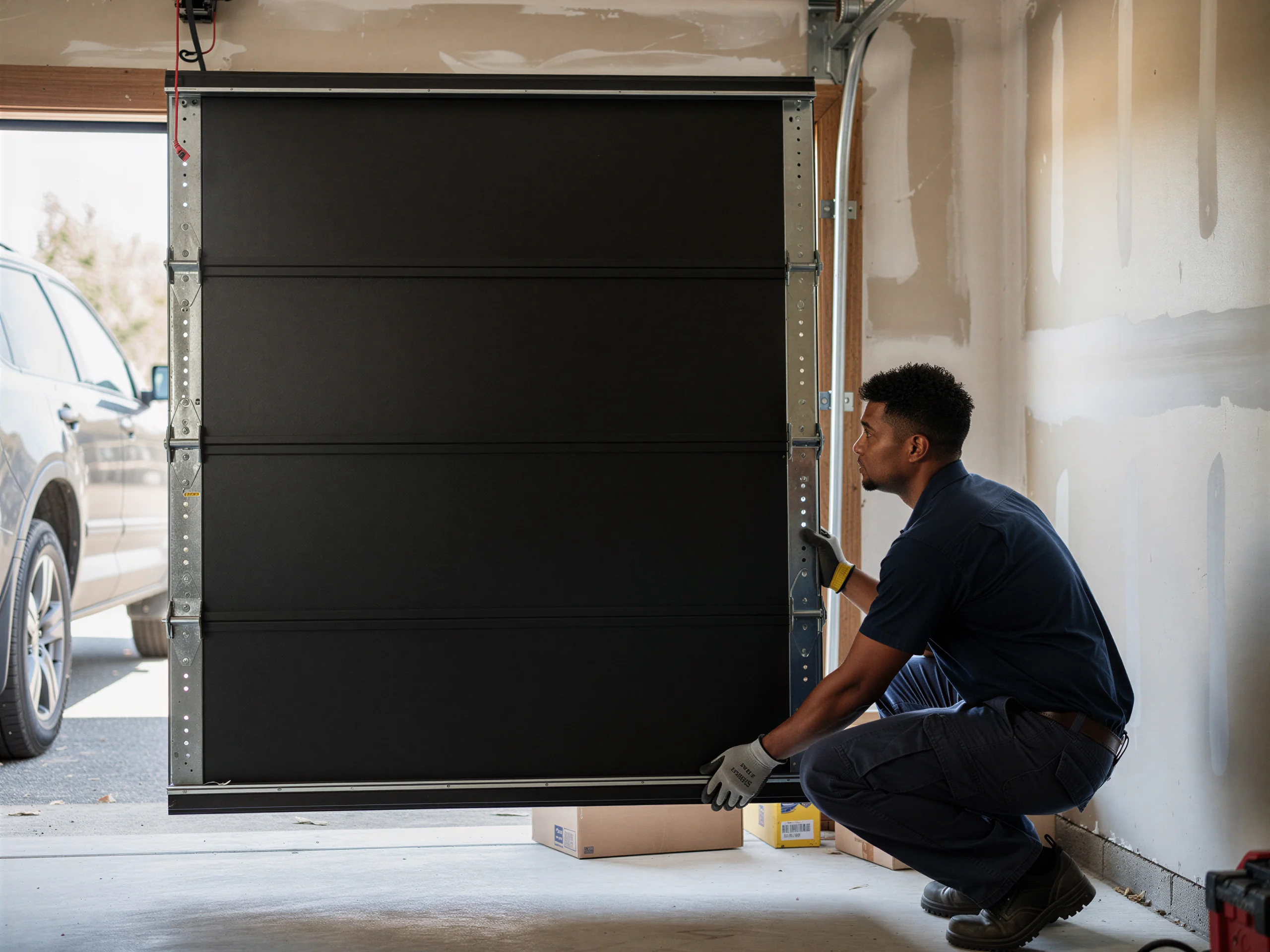
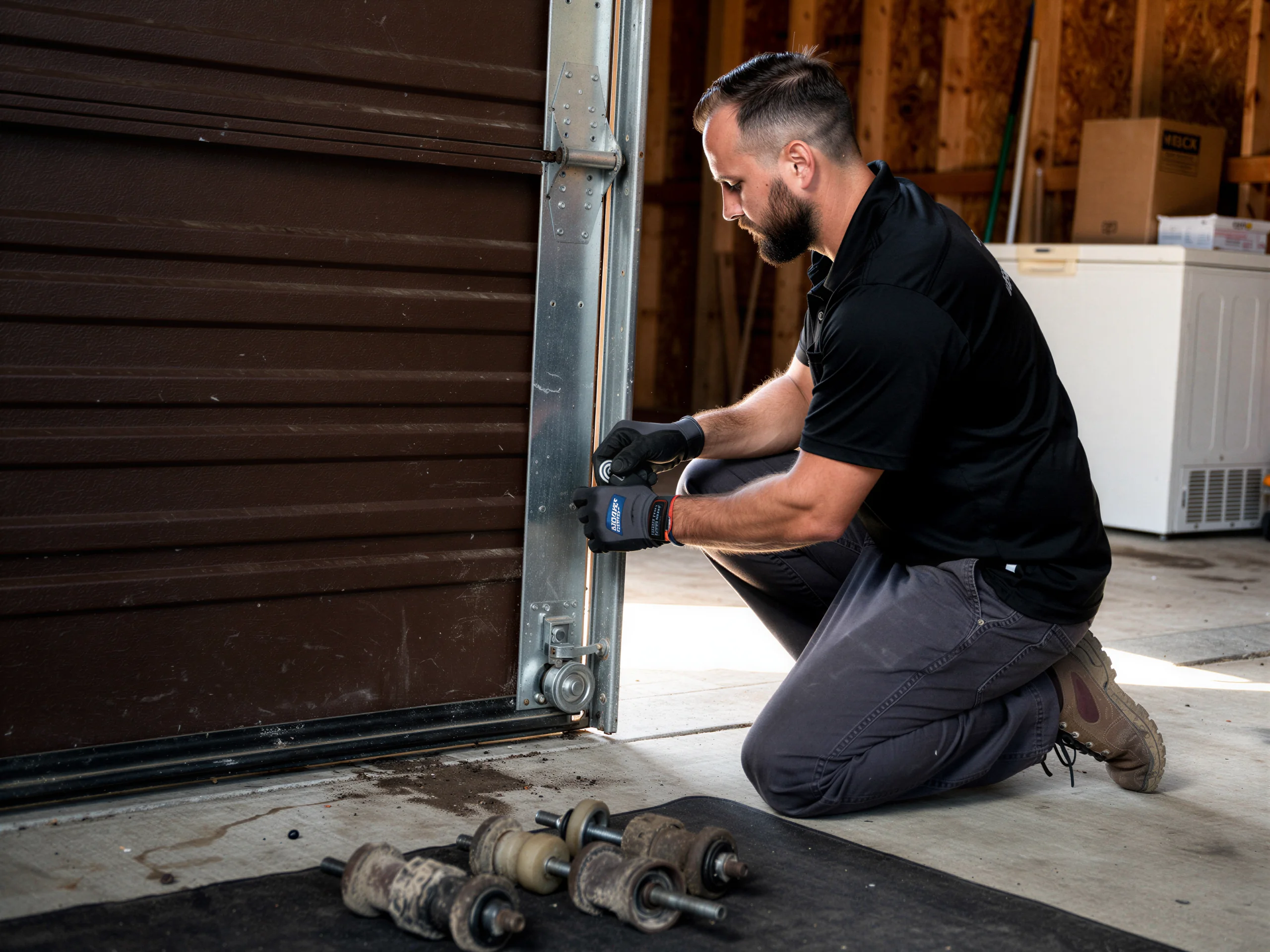
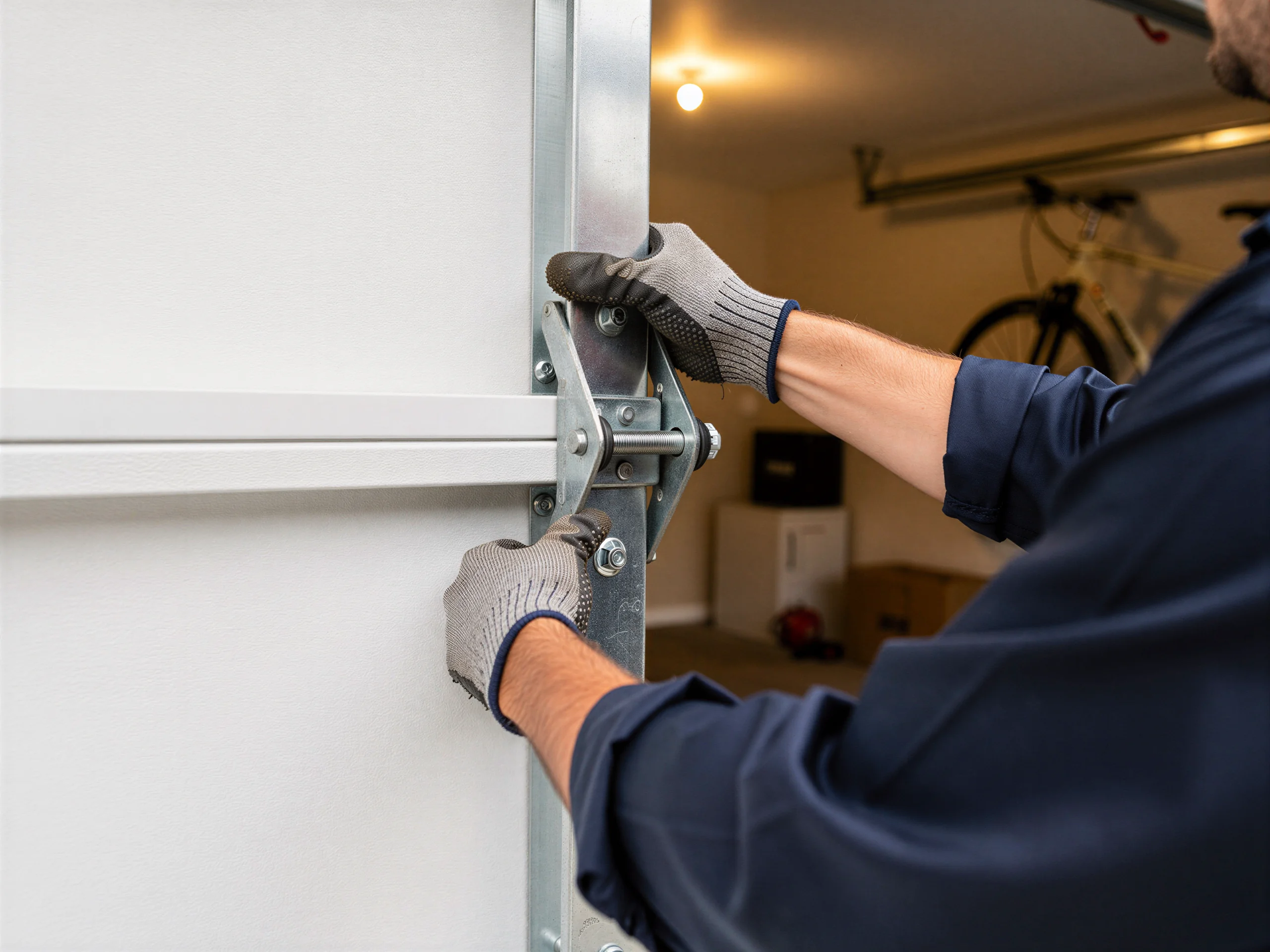
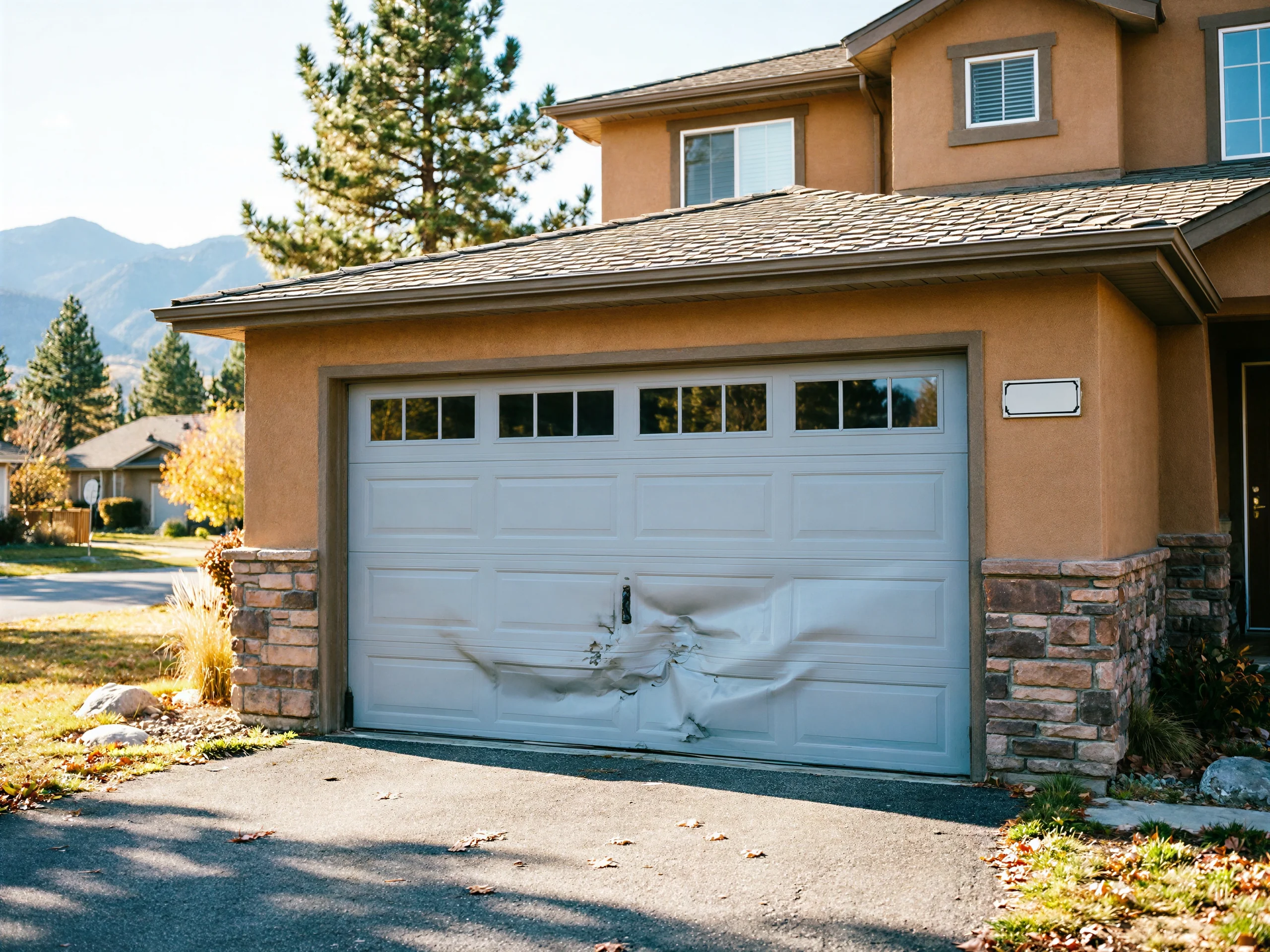
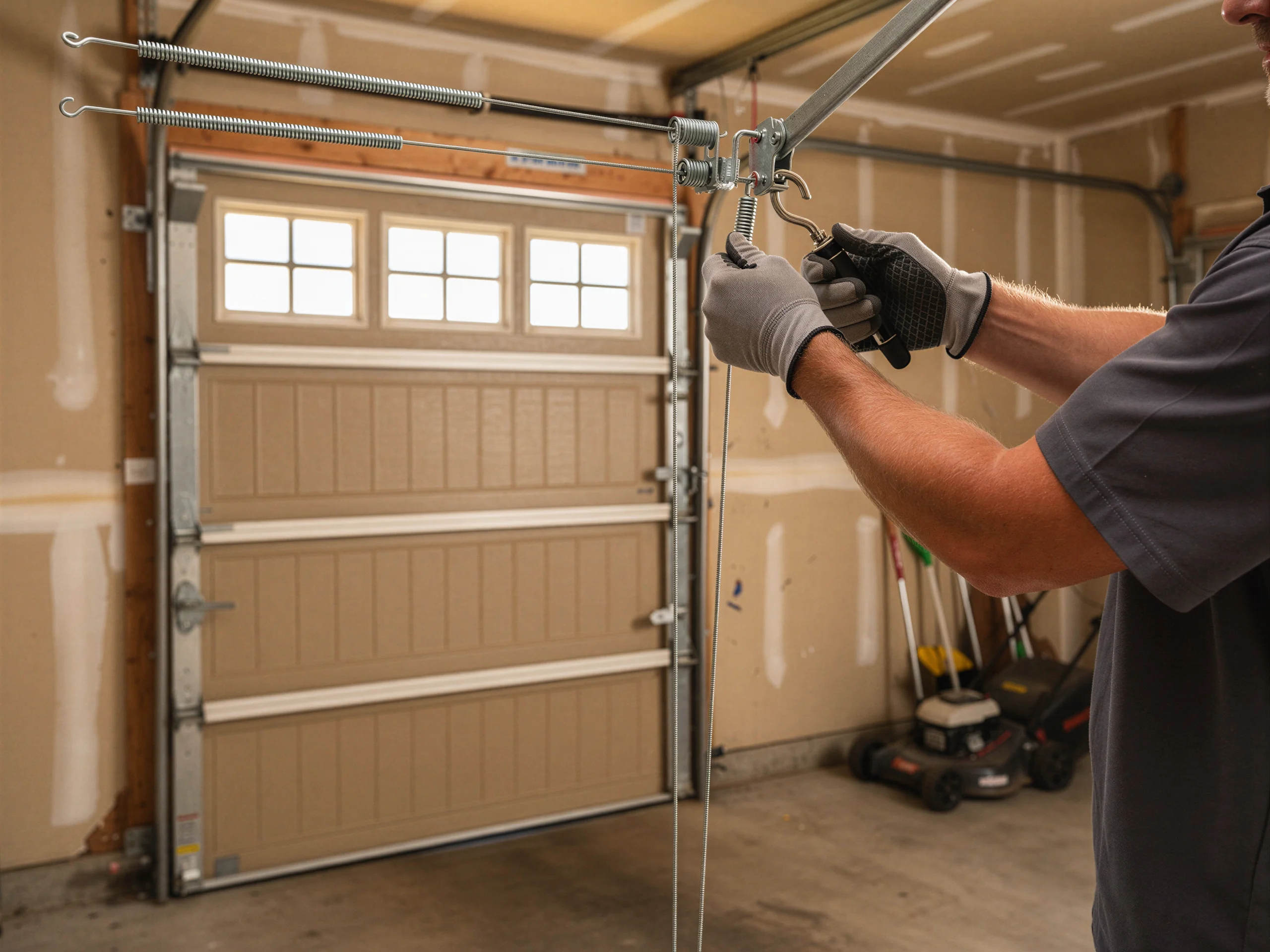
Cold-severe winters are hard on torsion springs no matter when the door was built, but a 1987-era door has had over three decades of freeze-thaw cycling on the same coil, the same end bearings, and often the same lift cable. Steel contracts in the cold, grease stiffens, and a spring that's been fine for years can let go on the one morning it's fifteen below. On the newer openers in this area, the failure is more often electrical than mechanical - a sensor eye knocked out of alignment by a bump, or a logic board that doesn't like deep cold starts. We'll be straight about one thing: if a spring job turns up a door that's also warped, rusted through at the bottom panel, or running on an opener that's clearly original and failing for the third time, we'll tell you replacement is the better money, not another patch. A new torsion spring on a door that's otherwise sound is a solid repair. Throwing one on a door that's structurally done is just delaying the real job.