
Helena, MT
What Breaks First in a Helena Garage Door
Helena homes built between 1967 and 2003 face garage door wear from Montana's severe cold winters. Here's what fails first, and what upkeep actually costs.
Why This Fails Locally
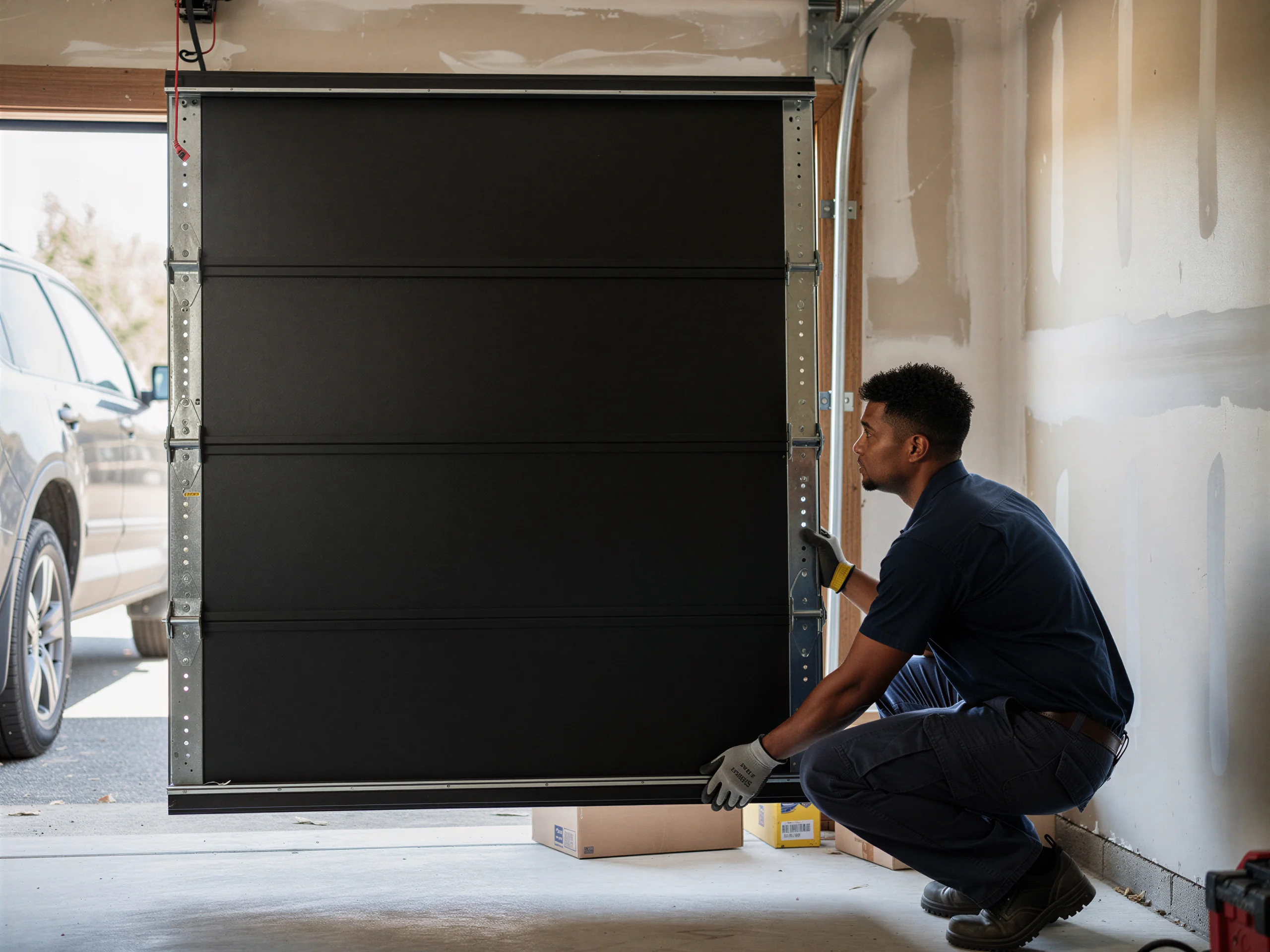
Most of the garage doors we look at in the Helena service area sit on houses built between 1967 and 2003, with the heaviest concentration from the 1980s and 90s across the seven communities we cover. That era of construction means a lot of original torsion springs, steel tracks, and weatherstripping that have never been touched since the house was framed. Add a severe cold climate on top of that, and you get a specific failure pattern: steel springs that were wound for a 20-year lifespan getting asked for 35, nylon rollers that go brittle below freezing, and bottom seals that crack instead of flexing once the mercury drops hard. None of this is about neglect. It's about materials from a specific build era meeting a specific climate band year after year. A door built in the mid-80s on a house in this service area has likely gone through three or four decades of freeze-thaw cycles on hardware that was never designed to be serviced, only replaced. Maintenance here isn't a luxury add-on - it's the thing that decides whether that original hardware makes it another winter or snaps a cable on a 10-degree morning with the car trapped inside.
Can You Do This Yourself
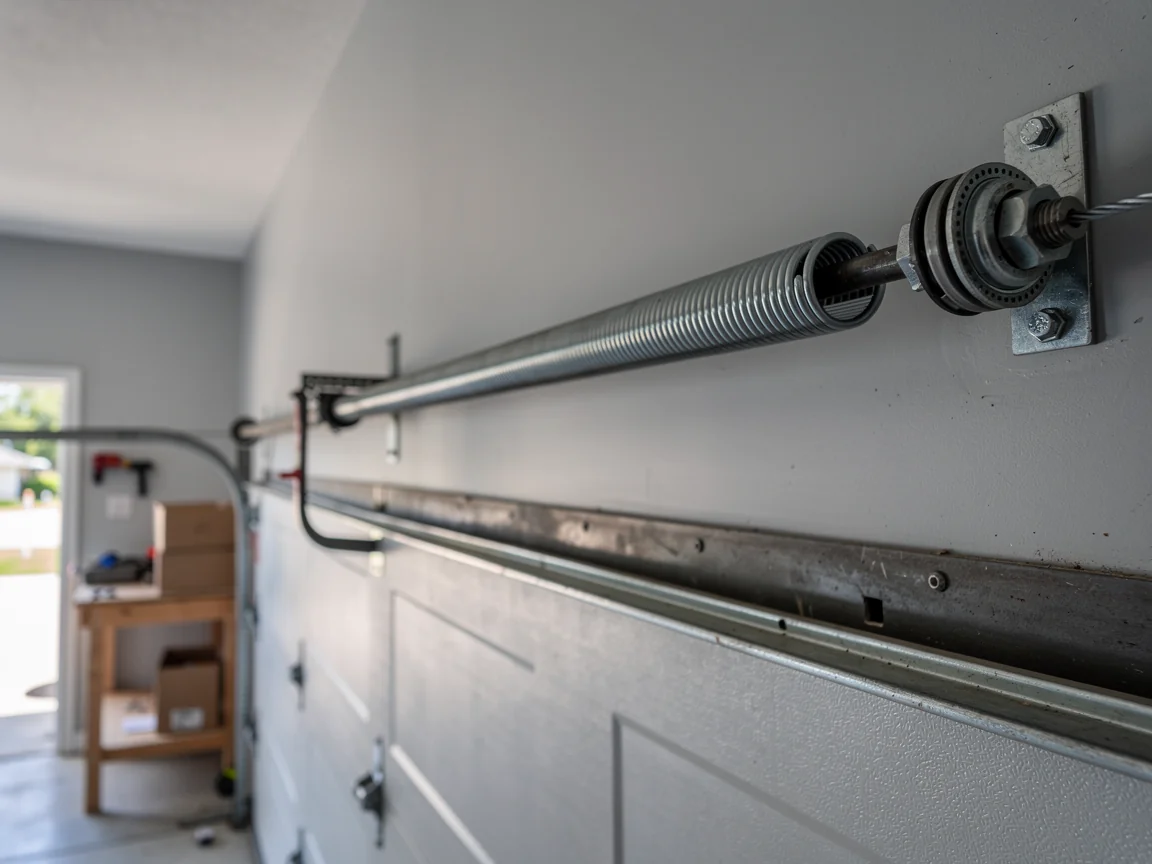
Some of it, yes. You can vacuum out the tracks, check that the bottom seal still makes full contact with the slab, and look at the springs for visible gaps in the coils or rust streaking down the winding cone.
Board test for reversing
You can also test the auto-reverse by laying a 2x4 under the door and running it down - if it doesn't bounce back, that's not a maintenance item, that's a call. What you should not do is touch a torsion spring under tension.
Springs carry full weight
These are wound to hold the full weight of the door and they do not forgive a mistake - this is the one place where a repair is not a DIY project, period. Lubricating hinges and rollers with the right product, twice a year, is realistic for most owners.
Diagnosing grinding on one side
Diagnosing why a door that's been fine for 20 years suddenly started grinding on one side usually isn't, because by then you're looking at worn bearing plates or a track that's shifted slightly out of plumb, and both take tools and experience to read correctly. If you're not sure which category a problem falls into, treat it as the second one.
How It Shows Up
On a lot of the houses we see from this build era, the first sign is noise - a grinding or popping on one side as a bearing plate wears unevenly, especially once winter sets in and the grease inside has stiffened up.
Slow closing, hesitating partway
The second sign is a door that looks like it's moving fine but takes noticeably longer to close, or hesitates partway down - that's often a spring that's lost tension gradually rather than snapped outright.
Heavier lift by hand
Owners also report a door that feels heavier to lift by hand than it used to, which almost always means the spring is doing less of the work than it was designed to. Cold makes all of this worse and faster: a seal that was marginal in October can be letting a visible gap of daylight through by January once it's hardened and shrunk.
Opener drawing extra current
The least obvious symptom is an opener that runs longer or draws more current to do the same job - homeowners rarely notice this until the opener itself fails, when the actual problem was a dragging track or a spring doing half its job for months beforehand.
What It Costs
We don't post a flat number here because the honest answer depends on what we find once we're looking at the actual spring, track, and seal in front of us, not a generic listing.
Maintenance cost versus neglect
A straightforward tune-up on a door that's been kept up reasonably well is a different job than one on a door that's been running on a half-dead spring for two winters and has worn rollers and a bent track section to match.
Maintenance as routine expense
What we can tell you is that most owners in this service area, with a median household income around $101,278, treat this as a maintenance expense rather than something to put off - it's cheaper and less disruptive than letting a spring finally let go on a January morning with the car stuck inside.
Limits of adjustment alone
The honest limitation: if your door needs more than adjustment and lubrication - if a spring is visibly gapped or a cable is fraying - we're not going to quote you a maintenance price and call it done, because that's not what fixes the problem. We'll tell you straight when a repair is the right call and when it genuinely isn't worth it.
Questions
Common questions
How often should I get my garage door serviced in Helena?
Twice a year is reasonable given the swing between summer heat and severe winter cold here - once before the cold sets in and once in spring to check what the freeze-thaw cycle did to seals and hardware. Doors on original 1980s-90s hardware benefit from the fall check especially, since that's when a marginal spring or seal tends to fail.
My garage door opener runs louder than it used to - is that a maintenance issue?
Often, yes. A dragging track, dry rollers, or a spring that's lost tension all make the opener work harder, and that shows up as extra noise and longer run time before anything actually breaks. It's worth having it looked at before the opener itself gets damaged from the added strain.
Can I just replace the weatherstripping myself?
Bottom seals are a reasonable DIY swap if you can get the right track profile for your door - this is one of the few jobs on this list that doesn't involve a spring under tension. If the seal keeps failing fast, though, it's worth checking whether the slab underneath has settled, which a new seal alone won't fix.
Is a snapped torsion spring something I can replace myself?
No. A torsion spring holds the full weight of the door under tension, and the tools to wind and unwind it safely aren't something most garages have lying around. This is the one repair on a garage door where we'd tell any owner, regardless of how handy they are, to call it in.
Explore more
Explore More Services In Helena, MT
Garage Door Installation Built for Helena's Winters and Housing Stock
New garage door installation for Helena homes built 1967-2003, sized for severe cold winters. Learn more →
Garage Door Off Track: A Helena-Area Problem
Helena homes built mostly between 1967 and 2003 see off-track doors from frozen rollers and worn brackets. Learn more →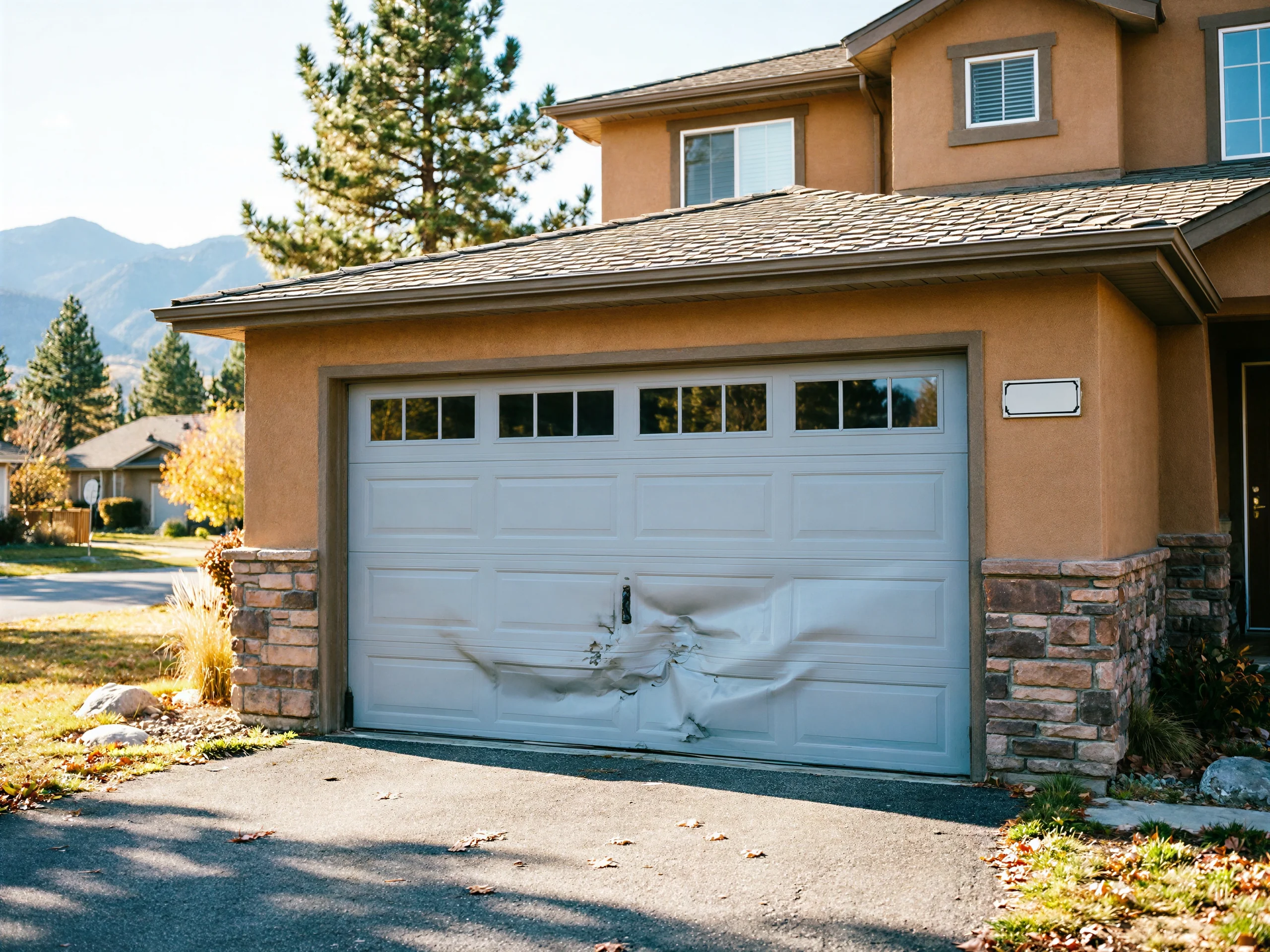
Garage Door Panel Replacement Around Helena
Dented or cracked garage door panels are common across Helena's 1967-2003 housing stock. Learn more →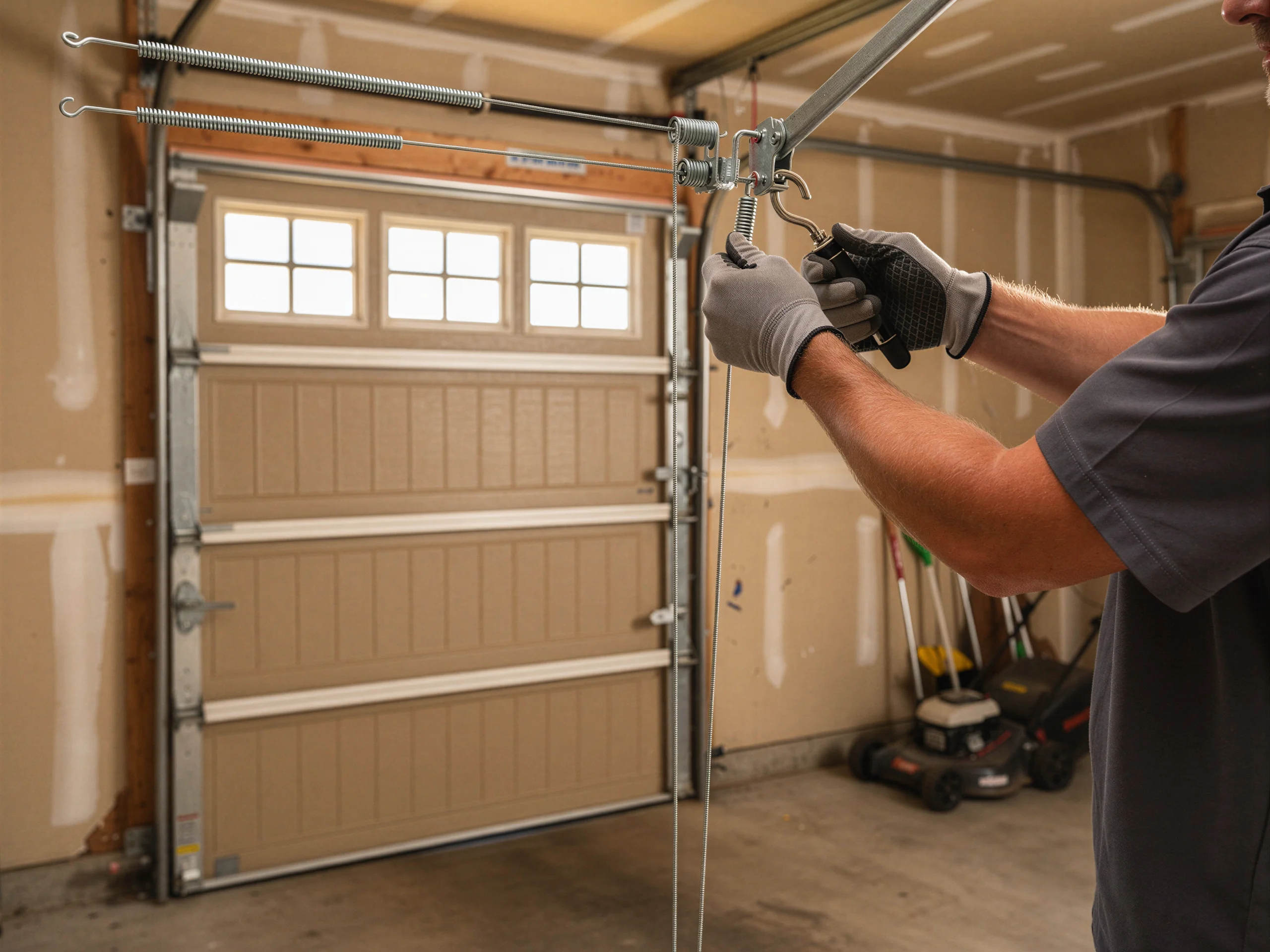
Spring Repair for Helena's 1980s-Era Garage Doors
Torsion and extension spring repair for Helena-area homes built mostly 1967-2003, where cold-climate stress cracks springs faster than milder regions. Learn more →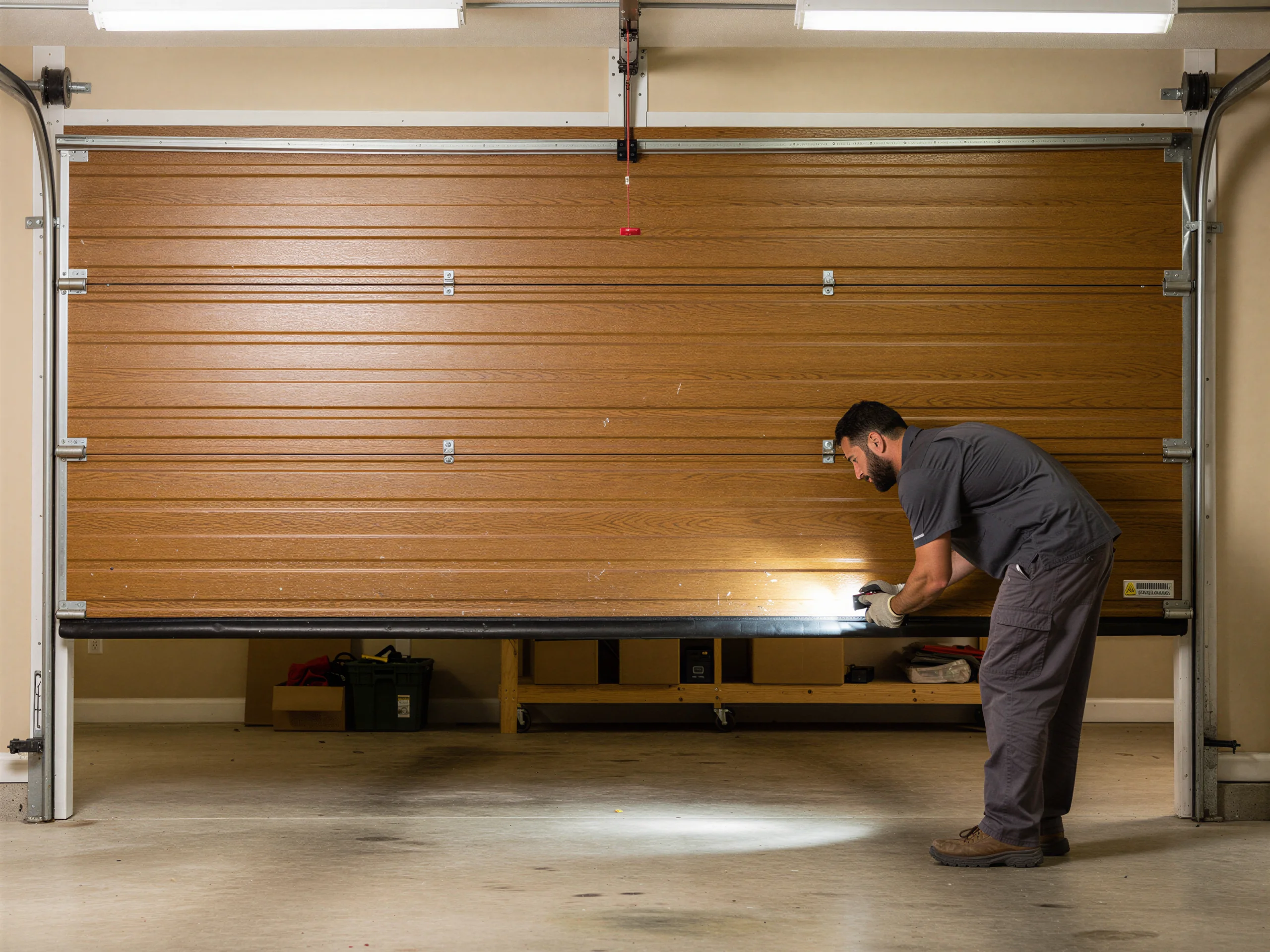
Garage Door Repair for Helena's 1980s-Era Homes
Garage door repair for Helena homes built 1967-2003, where cold-climate hardware and aging openers fail the same way across the valley's older subdivisions. Learn more →
Emergency Garage Door Repair for Helena Homes
Broken spring or stuck door in Helena's cold snaps? Learn more →Ready when you are
Need a garage door sorted in Helena?
Helena Garage Door Pros repairs and installs garage doors, springs and openers in Helena, MT and the surrounding area.